Required Motorcycles = n +1
A friend was having ongoing electrical problems with their bike and after 13 months in the bike shop, the shop handed the bike back saying they couldn’t repair it. The bike was only 10 years-old and as I have a background in electronics, I offered to have a look at it as it’s a great little bike.
Problems Bike Presented with…
The original issues the bike went into the shop for:
- When out on a ride the dash displayed lots of warning lights and died and wouldn’t start again.
- It also had an ongoing issue of the battery going flat if you didn’t ride it for a few days.
Handover Conversation with the Shop…
Speaking to the mechanic when I picked the bike up, he mentioned the following:
- they found a shorted wire to the frame and fixed it by installing a jumper wire to bypass the damaged wire.
- they replaced the battery with multiple new ones and they each died.
- their test equipment could not identify the current draw flattening and ultimately killing the battery.
- they removed all circuits and re-established each circuit and could not identify the current leak.
- they suggested that the bike would need a completely new wiring loom, which may fix the problem.
- they suggested just using a battery tender all the time.
I understand that these types of issues can take excessive time to run down, and a shop cannot devote endless hours to identify and fix a problem. There is a point where the amount it costs (in labour alone where you may invest 20+ hours) to repair can outweigh the value of the bike. I certainly understand this. As an electronics technician, I got out of the industry in the mid-90s as the price of consumer electronics equipment came down and the cost of parts and labour increased, so repairing consumer equipment became unviable.
What I found…
Getting the bike home the first thing I did was to pull it down to see what I could see. On the surface I found:
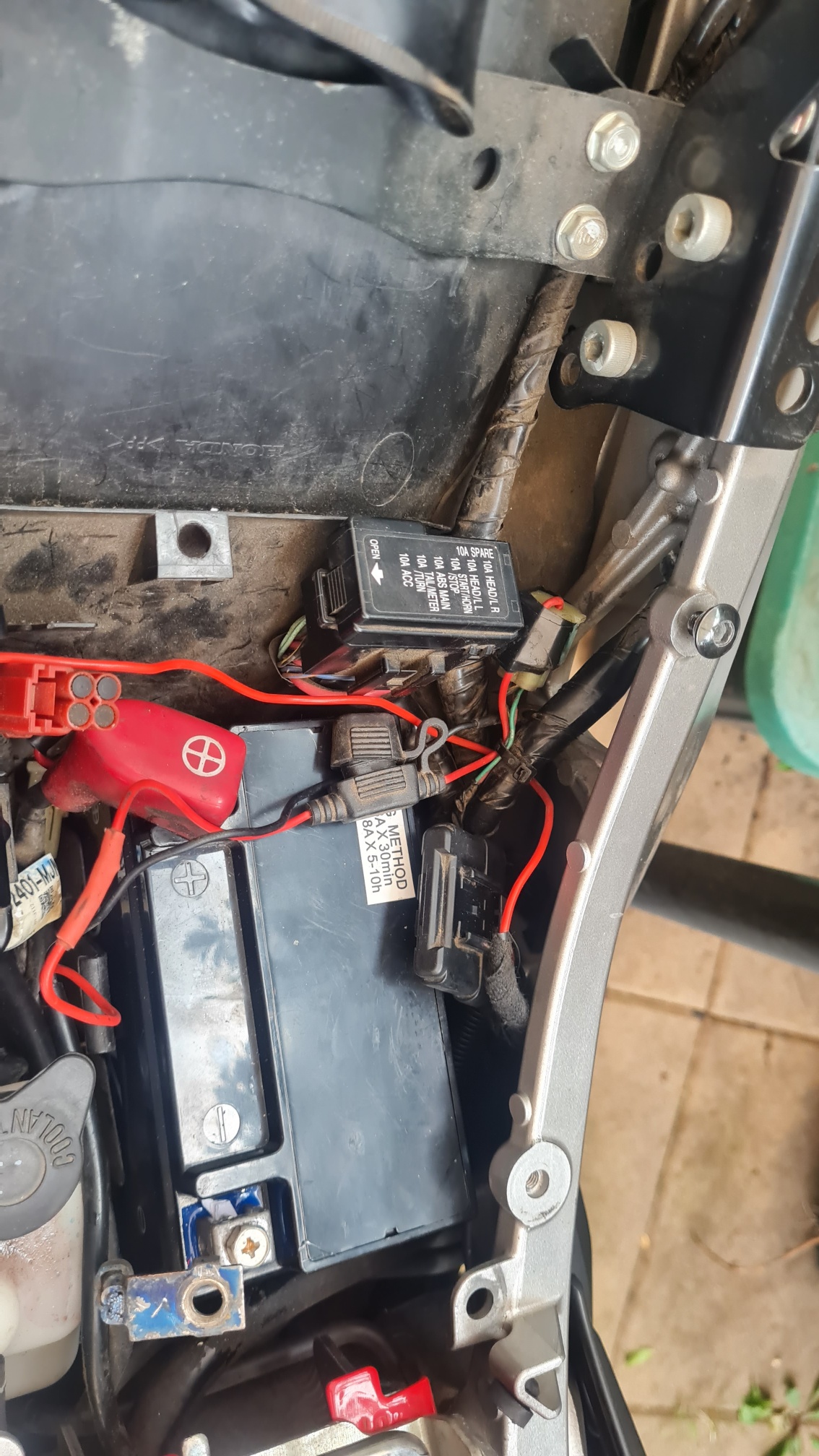
- The shop installed a 9AH battery instead of the larger 12AH battery that is standard.
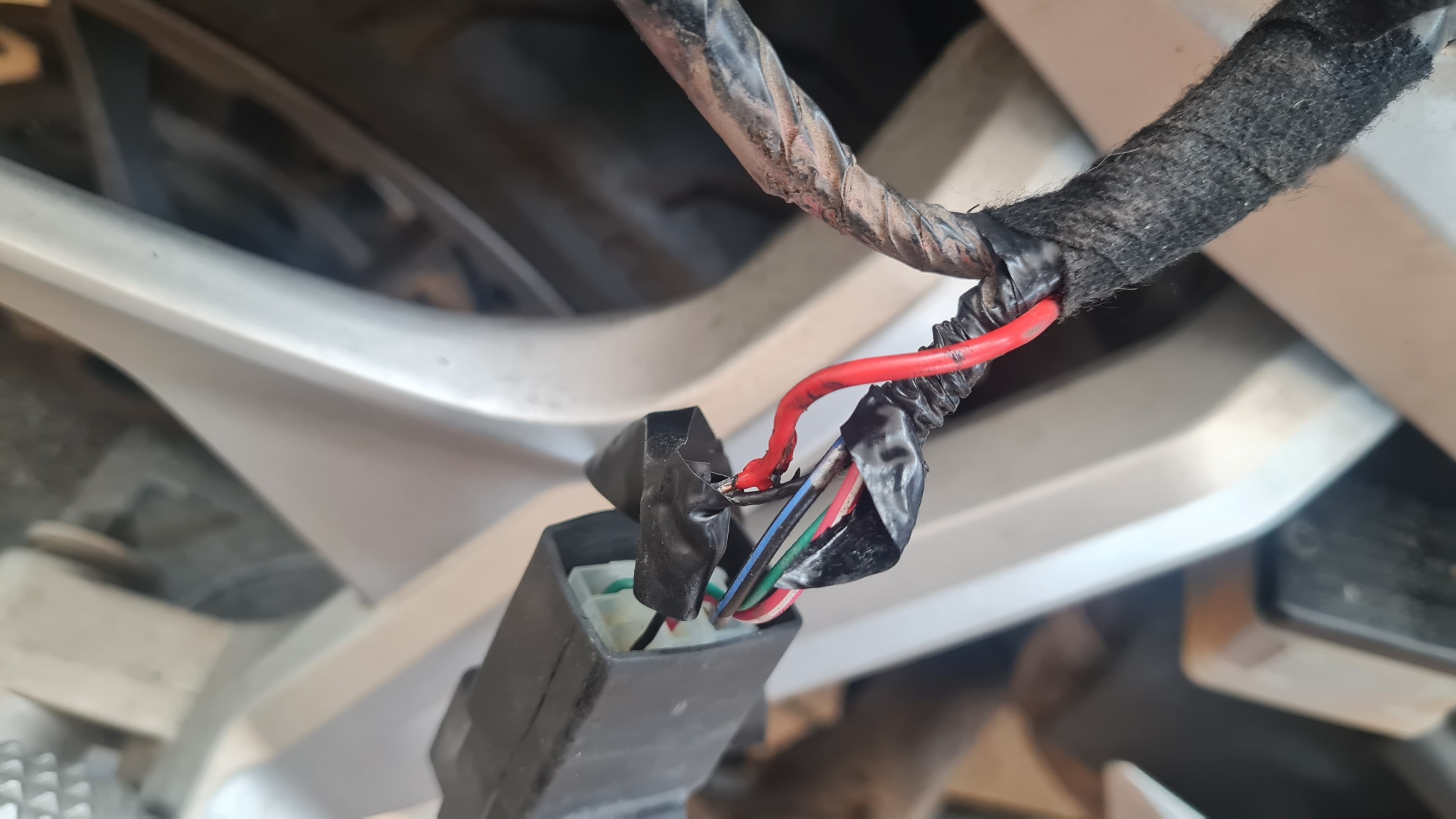
- A jumper wire had been added between a junction box to a relay on the righthand side of the bike.
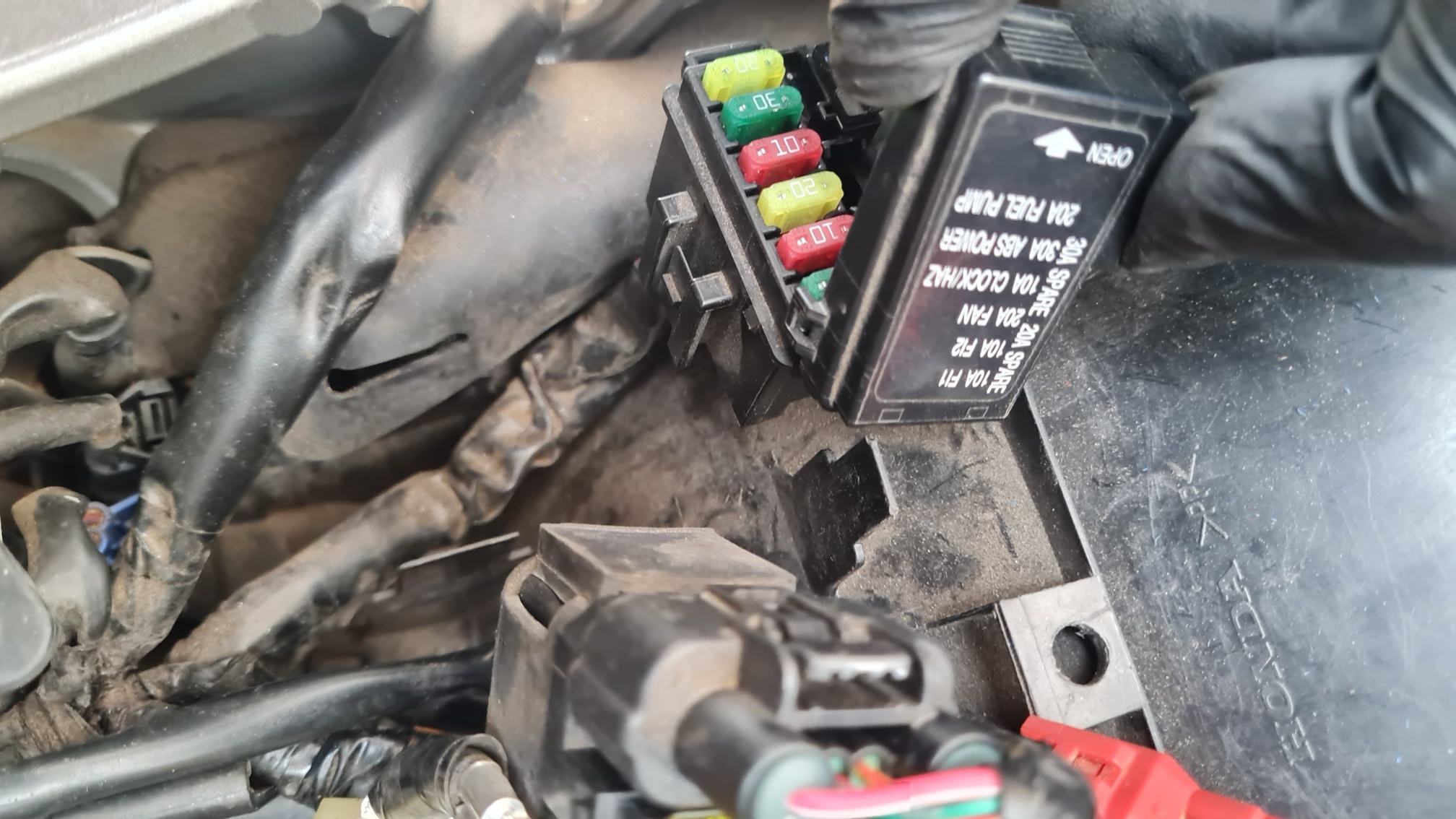
- The 10-amp fuel injection (FI1) fuse had been incorrectly replaced with a 30-amp fuse.
What I Did…
With the bike in pieces, I started it up to test a few things. One time I started it, the bike wouldn’t turn off, not by the key, or the kill switch. In the end I had to pull the master fuse to kill it.
It was clear that I was going to need a better wiring diagram than the small A4 black and white schematic diagram the shop gave me. A bit of Google Fu later and I had a colour schematic diagram which I printed across three A3 pages. With the large colour wiring diagram on my table, I was ready to delve into what was going on.
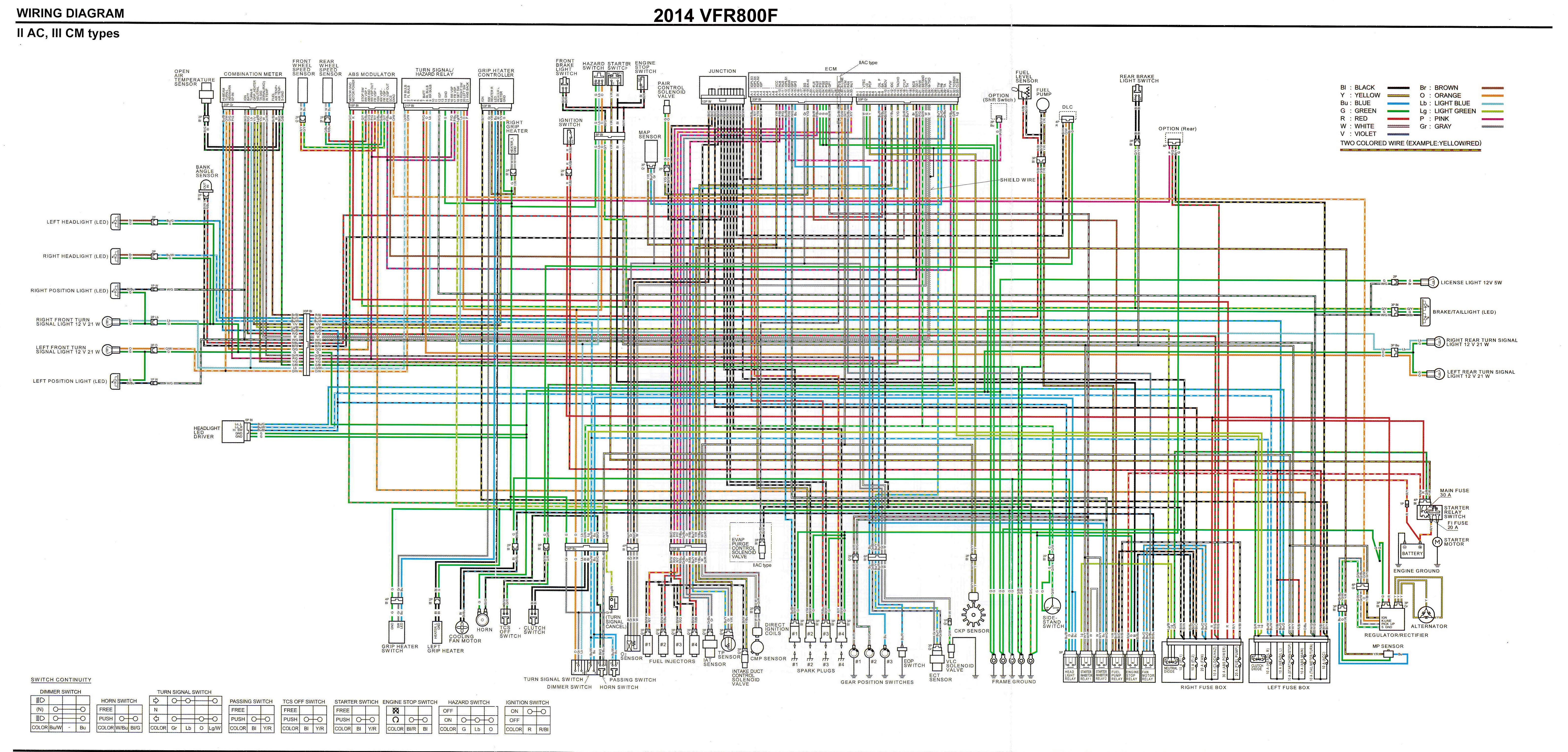
What I discovered was the damaged wire on the power junction box could easily have shorted to the chassis given its location. The black/white wire in question came directly from the fuse box (FI1) to the power distribution junction box for the injectors and spark plugs. When it shorted to the chassis it would have blown the FI1 fuse stopping the bike, and likely resulting in multiple warning lights being displayed.
Then replacing this 10-amp fuse with a 30-amp fuse was a big no no.!
Reviewing the shop’s jumper wire ‘fix’ revealed a few things:
- The installation of the jumper wire was a very rough amateurish job.
- The installed jumper wire looped the injector/spark power circuit to the engine kill relay trigger which resulted in the engine stop relay being held closed not allowing the engine to be shut off in certain circumstances.
- Testing the continuity of the wire between the junction box and the fuse box revealed no problems with the wire.
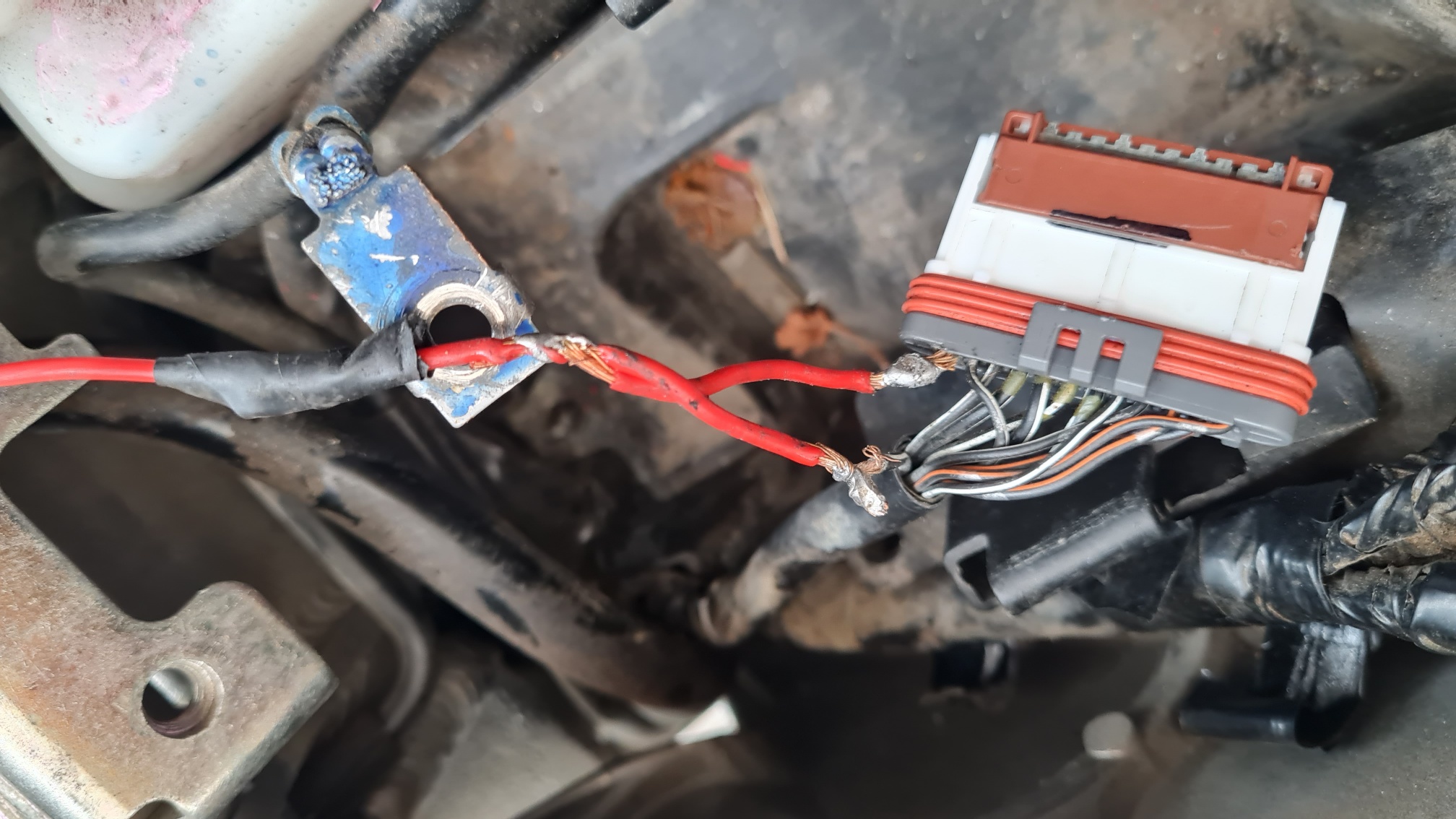
After removing the jumper wire, repairing the wiring, improving the overall insulation of the repaired wire, and repositioning the junction box away from the frame I never had a problem with it shorting and stopping the bike again.
The secondary problem – battery going flat after a couple of days of not riding it.
Generally, these types of issues need a methodical approach to track down and identify the source of the discharge, flattening the battery. The service manual states there should be less than 1mA current draw with the bike turned off. My process:
- I charged the battery and left the battery connected for a couple of days, and after a couple of days, the battery was under 12 volts.
- I charged the battery and left it disconnected for a few days and there was no noticeable drop in battery voltage.
- I installed the battery and pulled the main 30-amp main fuse and tested the current draw across the terminals and the only current draw was a very small draw (only a few mAs) when the HISS immobiliser light flashed on the dash.
- I left the bike for a few days with the main 30-amp fuse removed and there was no noticeable drop in battery voltage.
- With the ammeter across the terminals of main fuse (300mA range) I turned the key on (without starting the bike) and then off. After the bike was turned off there was an 80mA residual current draw.
- I left the bike in this state with the ammeter connected for a number of hours and the 80mA current draw persisted. An 80mA current draw will certainly flatten the battery within a few days.
- Pulling fuses did not locate the source of the 80mA draw.
- Disconnecting the Regulator/Rectifier and carrying out the same test and there was no longer any residual current draw when the bike was turned off.
- I left the bike with the regulator/Rectifier disconnected for a few days and there was no noticeable drop in voltage of the battery.
- I sourced and installed a second-hand Regulator/Rectifier and carrying-out the same test, there was no residual current draw.
- I charged up the battery and left the bike for 10 days while we were on our Great Ocean Road trip. Checking the voltage on our return and the battery voltage had only dropped by 0.02V and the bike started without any problems at all.
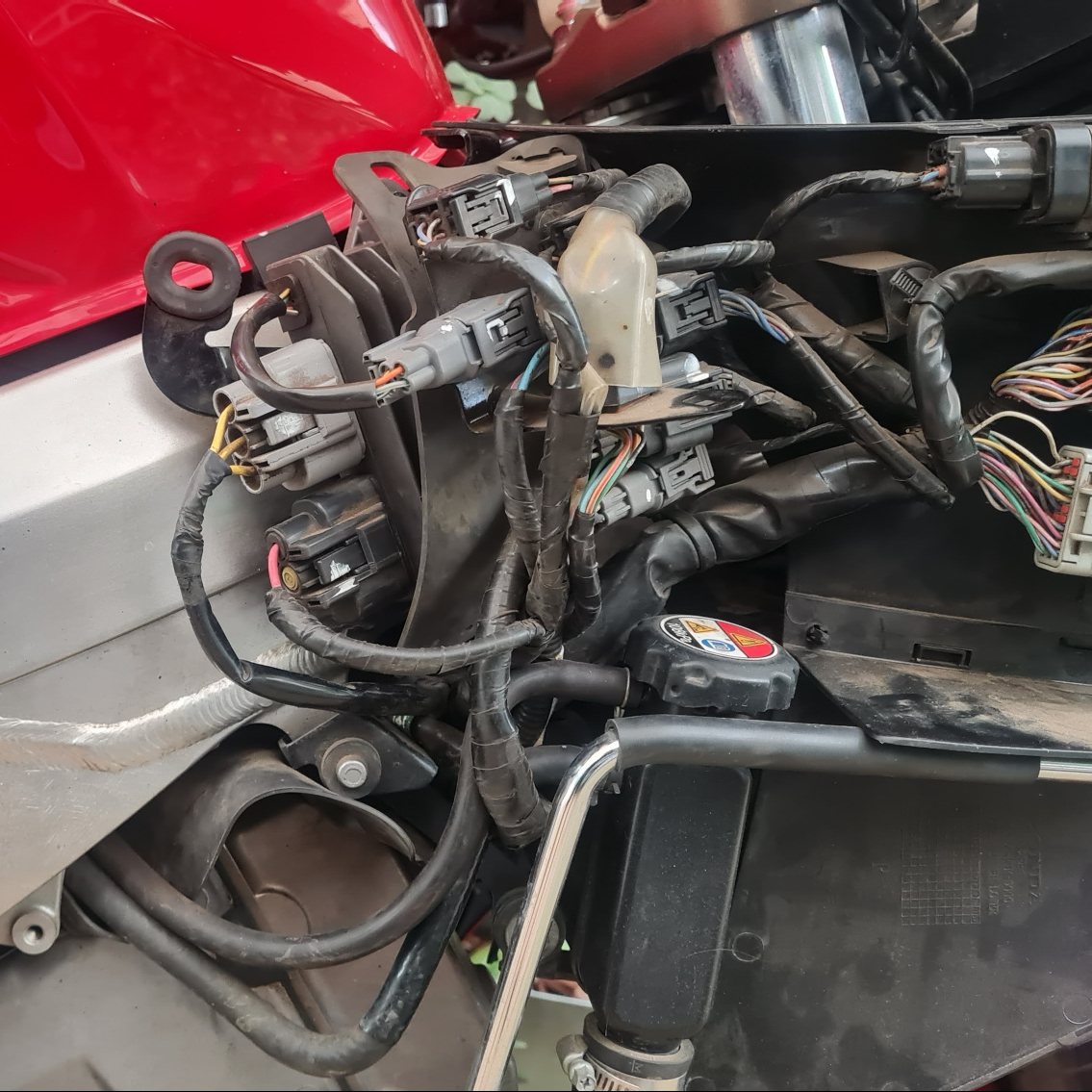
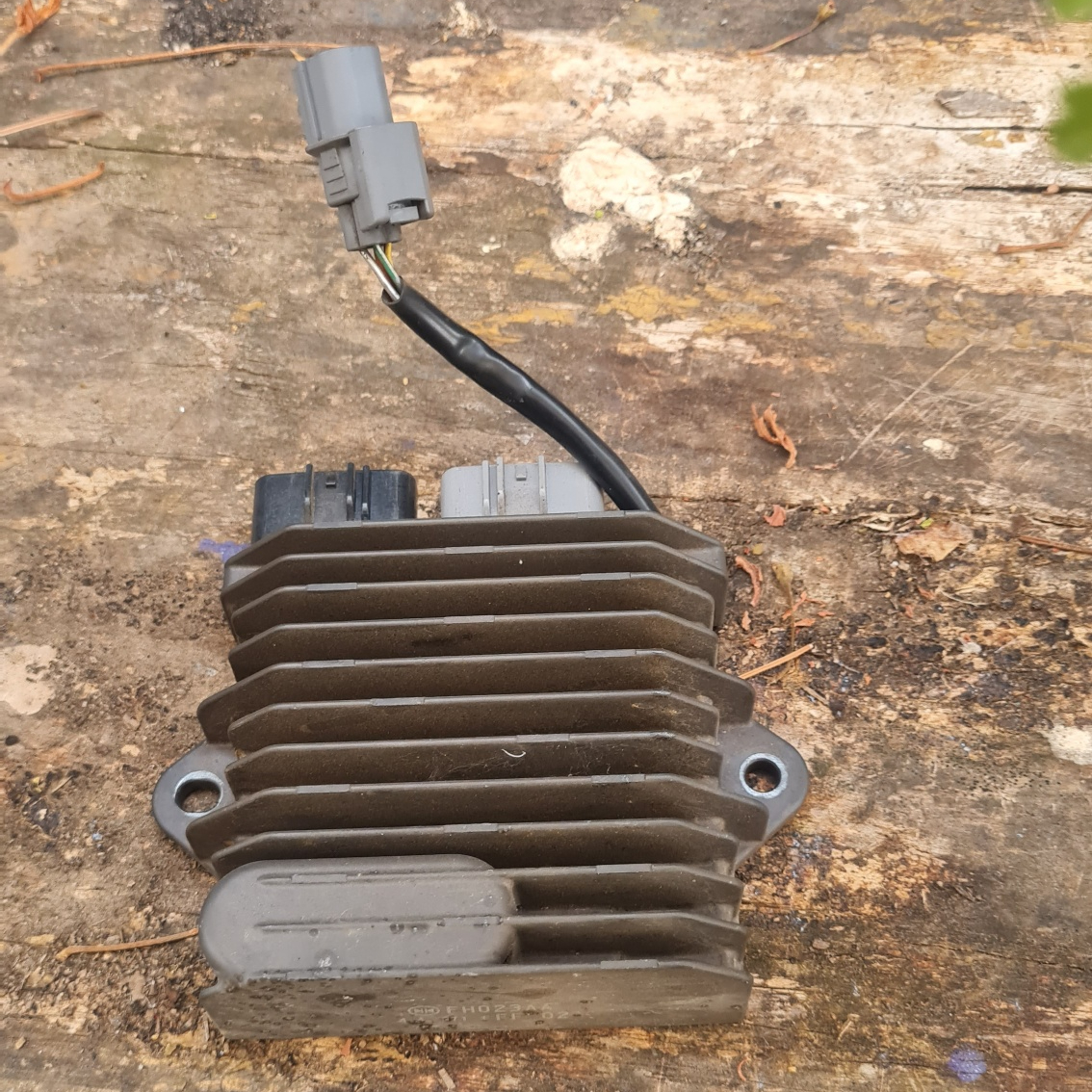
While the bike was in the shop, I had spoken to the technician about the regulator (on behalf of my friend). The technician said they tested the regulator and all the circuits. A couple of visits later and they wanted to replace the whole loom (which wouldn’t have fixed the issue). Therefore, I didn’t jump straight to looking at the regulator but wanted to start from scratch and work through the issue methodically.
Since fixing the bike I have been riding it to work, a few longer rides, as well leaving the bike sit for a week or more, to ensure it didn’t have any ongoing issues.
Outcome…
While I had the bike for a couple of months, the actual time I devoted to it was likely about a day’s effort in total given I did lots of small tests and then letting it sit.
I have been into the bike shop and discussed what I found with the Service Manager … and they were largely uninterested.
With the bike thoroughly tested I was convinced that the bike was fixed, and it was ready to be handed back. But with such a long and ongoing saga they were really over it, and their life had taken a different direction, and the bike wasn’t a part of that new direction. So, they offered the bike to me at a price I couldn’t refuse.
So now I’m the proud owner of a 2014 Honda VFR800.


 Zed14
Zed14 
Enjoy your VFR. I know I enjoyed mine for 10 years. (’04 model in a beautiful blue colour).
I’m a little surprised that they hadn’t thought to look more closely at the RR, that was always a weak spot in the VFR (possibly the only weak spot?). Pretty sure I had to replace an RR at some point.
LikeLike
Exactly. I had a 1994 gen 4 VFR750 as well and I’ve replaced the reg/rec on that a couple of times.
LikeLike
It is fascinating to me that most dealerships are not interested to work on bikes more than ten years old. I am surprised that the technician was not interested to hear your feedback about what was wrong with the bike. Congratulations finding the problem. Sometimes finding a parasitic electrical drain is not easy.
LikeLike
Random unrelated question, any thoughts on route from Sydney to Tumut? Was looking at over the Blue Mountains, then either through Bathurst, Cowra to Gundagai and Tumut, or through Taralga to Crookwell then Boorowa to Gundagai? In October, not now.
LikeLike
You could do Bathurst, Tuena, Crookwell, Boorowa, Coolac, Adjungbilly, Billapaloola, Brindabella Rd to Tumut.
Nice backroads, there was a couple of kms of dirt on Wee Jasper Rd the rest is tar.
Send me a message under my contact me page and I can send you a link
LikeLike